Noah's Vineyard Font: Crafting Heritage in Every Letter
Unveiling the Artisanal Spirit of a Premium Script Font
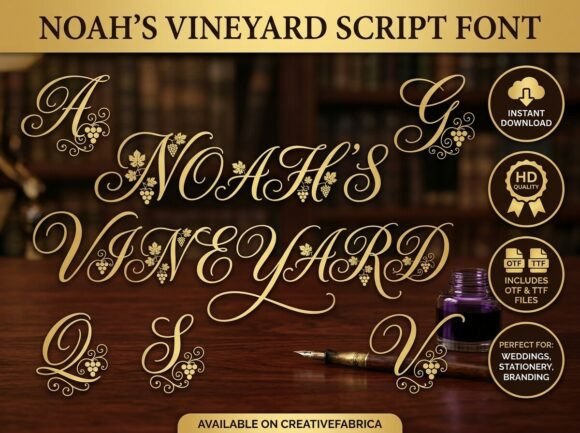
There’s a certain romance to things crafted by hand, a story embedded in every curve and stroke. This is the essence captured by Noah's Vineyard, a premium script font that transcends mere lettering. It’s a design asset that brings the warmth of a sun-drenched harvest and the legacy of an estate to your projects. More than just a typeface, it’s a visual narrative. Its fluid, calligraphic letterforms are intricately adorned with hand-drawn grapevine clusters, delicate tendrils, and vineyard leaves. The sweeping swashes give it a dynamic, flowing energy, while the overall "estate-bottled" aesthetic grounds it in a sense of timelessness and authenticity. This isn't a generic handwritten font; it’s a meticulously crafted piece of typography with a distinct personality—one of sophistication, heritage, and artisanal care.
Where Heritage Meets Design: Ideal Applications
The true value of a creative font like Noah's Vineyard lies in its application. It’s a specialist, not a generalist, and understanding where it shines is key to leveraging its full potential. Its personality is a perfect match for projects that aim to convey quality, tradition, and a handcrafted touch.
- Luxury Winery & Beverage Branding: This is its natural habitat. Use it for logo design, wine labels, tasting room signage, and menu headers. It instantly communicates terroir and craftsmanship, setting a brand apart in a crowded market.
- Artisanal Food Packaging: For small-batch jams, olive oils, craft cheeses, or gourmet chocolates, Noah’s Vineyard adds that crucial layer of perceived quality and care. It tells the customer this product is special.
- Sophisticated Wedding & Event Stationery: From save-the-dates and invitations to place cards and thank-you notes, this script font brings an elegant, personalized flourish that feels both luxurious and intimate.
- Editorial & Publishing Design: Think book covers for historical fiction, magazine feature headers about travel or cuisine, or chapter titles in a heritage cookbook. It provides a powerful, thematic visual hierarchy.
- Digital Presence & Social Media: While requiring careful use due to its detail, it can create stunning hero text on a website, impactful quote graphics on Instagram, or elegant headers for a lifestyle blog.
Consider a local bakery rebranding its line of sourdough bread. Using Noah's Vineyard for the logo and packaging header instantly tells a story of tradition and slow fermentation, differentiating it from mass-produced alternatives. Similarly, a boutique hotel could use it on its welcome cards and spa brochures to evoke a sense of rustic luxury and personalized service.
The Strategic Impact on Brand Perception and Engagement
Choosing a typeface is a strategic decision that directly influences how an audience perceives a brand. The right font doesn't just look good; it works hard to build brand identity and drive engagement. Noah’s Vineyard, as a display font, is particularly powerful in this regard.
First, it establishes an immediate emotional connection. The organic, hand-drawn elements evoke feelings of warmth, nostalgia, and authenticity. This can significantly enhance brand perception, positioning a business as premium, dedicated, and story-driven. Second, it creates instant recognition. In a sea of clean sans serif fonts and standard serif fonts, the unique silhouette of Noah's Vineyard is memorable. A customer who sees it once is likely to associate that distinctive style with your brand again.
However, this power comes with responsibility. Its ornate nature means readability is a consideration, especially at small sizes or in long blocks of text. This is where understanding its role in visual hierarchy is critical. Use it for headlines, pull quotes, and logos—places where its beauty can be appreciated without hindering comprehension. Pair it wisely with a clean, highly legible sans serif font for body copy to ensure your message is both beautiful and clear. This balance is the hallmark of professional modern typography and is essential for maintaining consistency and professionalism across all touchpoints, from a website to a printed brochure.
A Practical Guide to Working with Noah's Vineyard
Integrating a character-rich font like this into your workflow requires a thoughtful approach. Here’s how to do it effectively:
- Evaluate the Project Fit: Before you even download, ask: Does my project’s theme align with the font’s personality? Is it for a luxury, artisanal, or heritage-focused brand? If the answer is yes, proceed. If you’re designing for a tech startup or a minimalist corporate report, this likely isn’t the right tool.
- Explore the Full Family: Don’t just look at the standard characters. A premium font often includes stylistic alternates, ligatures, and additional swashes. Spend time in your design software’s glyphs panel to discover these extras. They allow for customization and can make your lettering feel truly unique.
- Test Font Pairings Rigorously: The success of your design often hinges on its partner. Test Noah’s Vineyard with a range of serif fonts and sans serif fonts. A geometric sans serif can provide a clean, modern contrast, while a traditional serif can reinforce the classic feel. Always test the pairing in context—at the size and on the background you intend to use.
- Prioritize Readability: Set sample text at the intended size. Can you read it effortlessly from a typical viewing distance? For digital web design, consider how it renders on different screens. For print, request a proof if possible. If legibility suffers, use it only for very short, impactful phrases.
- Understand the License: As a commercial font, Noah’s Vineyard comes with a license that dictates how it can be used. Ensure you purchase the correct license for your needs—whether for a single client project, a product for sale (like a template), or for your own business’s branding. This is a non-negotiable part of using design assets ethically and legally.
Ultimately, Noah's Vineyard is more than a collection of glyphs; it’s a tool for storytelling. When used with intention and skill, it allows designers, entrepreneurs, and creators to infuse their work with a sense of place, history, and handcrafted quality that resonates deeply with an audience seeking authenticity.