Why Chicken Steak Font Captures Modern Handmade Charm
When you first encounter the Chicken Steak Font, there is an immediate sense of warmth that digital assets rarely achieve. It feels less like a geometric vector file and more like a note passed between friends. For designers and business owners navigating a sea of sterile, corporate typography, finding a typeface with genuine personality is like striking gold. This particular handwritten font manages to walk the fine line between professional polish and casual whimsy, offering a creative font solution that feels both personal and high-end. It is not just about the letters themselves, but the story they tell the moment they hit the canvas.
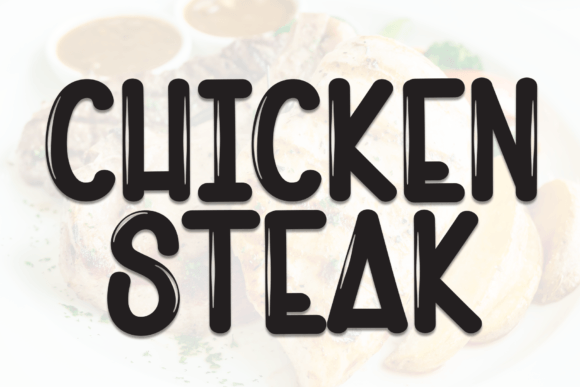
Visually, the Chicken Steak Font is characterized by its fluid strokes and balanced imperfections. It avoids the jagged, frantic look of some script font styles, opting instead for a smoother, more legible flow. The letterforms possess a soft, rounded quality that feels inviting and gentle. This display font is designed to catch the eye, but it does so with a friendly wave rather than a shout. The weight of the font is generally consistent, providing a solid foundation that works beautifully for headlines, logos, and short bursts of text. It is a premium font that carries the distinct energy of hand-lettering, bringing an organic texture to digital screens and printed paper alike.
The Sweet Spot: Applications in Branding and Packaging
For entrepreneurs and small business owners, the decision to use a specific typeface is rarely just aesthetic—it is strategic. Brand identity relies heavily on how a customer feels when they look at a logo or website. The Chicken Steak Font excels in industries where trust, approachability, and creativity are paramount. If you are running a boutique bakery, a lifestyle blog, or a handmade goods shop, this font speaks your audience's language. It suggests that there is a human being behind the brand, someone who cares about the details.
In packaging design, this typeface truly shines. Imagine a line of artisanal jams or a series of scented candles. Using a rigid, geometric sans-serif might make the product feel cold or mass-produced. However, applying the Chicken Steak Font to the label instantly elevates the product to "handcrafted" status. It works incredibly well for the logo mark or the product name, drawing the consumer in with its charming and inviting allure. It pairs surprisingly well with a clean, neutral sans serif font for the ingredients list, creating a visual hierarchy that is both functional and beautiful.
Even in editorial design, there is a place for this sweet disposition. While you wouldn't use a handwritten font for body text in a novel, it is perfect for pull quotes, chapter titles in lifestyle magazines, or headers in a digital newsletter. It breaks the monotony of standard text blocks and guides the reader's eye to key takeaways. For web design, using this font for hero text or call-to-action buttons can soften the user experience, making a website feel less like a corporate portal and more like a welcoming community space.
Mastering the Mix: Pairing and Practicality
One of the most common pitfalls in modern typography is overusing a decorative font. The Chicken Steak Font is powerful, but like any strong spice, it must be used with intention. As a general rule of thumb for font pairing, contrast is your best friend. Because this typeface has a lot of movement and character, it demands a grounded partner.
Consider pairing it with a robust serif font for a classic, editorial look, or a geometric sans serif font for something more contemporary and clean. For example, if you are designing a wedding invitation, the Chicken Steak Font could handle the names of the couple, while a clean serif handles the date and venue details. This ensures that the design remains elegant and sophisticated without becoming difficult to read. The goal is to let the handwritten font provide the personality while the secondary font provides the structure.
Readability is the non-negotiable factor in any design project. While Chicken Steak Font is crafted for legibility, it is still a display font. This means it performs best at larger sizes. Trying to force it into a 10-point caption will likely result in a muddy visual mess. Always test your typography at the size it will actually be viewed. If you are creating social media graphics, where viewing happens on mobile screens, ensure the text is large enough to be distinct even on a small retina display. The spacing, or kerning, is generally forgiving in this style, but always double-check your specific words to ensure the "handwritten" connections don't create awkward gaps.
Commercial Versatility and Licensing
For the professional designer or publisher, understanding the utility of a commercial font is critical. The Chicken Steak Font is not just a pretty face; it is a versatile design asset. Whether you are working on logo design for a client, creating merchandise for an Etsy shop, or developing social media graphics for a marketing campaign, this font adapts to the medium.
When evaluating this font for a project, look at the specific styles included in the family. Often, premium fonts come with alternates or ligatures—special character variations that activate when specific letters are typed together. These features are what separate amateur designs from professional ones. They prevent the "cookie-cutter" look where every 'o' looks exactly the same, adding that authentic hand-lettered realism. Check if the font includes multilingual support if you are working with international clients or audiences.
Ultimately, the Chicken Steak Font offers a way to inject "joy and fun" into your work without sacrificing professionalism. It bridges the gap between the digital and the analog, reminding us that design is, at its heart, a form of communication. By choosing this typeface, you are choosing to communicate with warmth, clarity, and a dash of creative playfulness. It is a tool that invites your audience to lean in, smile, and engage with your message on a more personal level.